10 Essential Home Electrician Tools Every DIYer Should Have in Their Toolkit
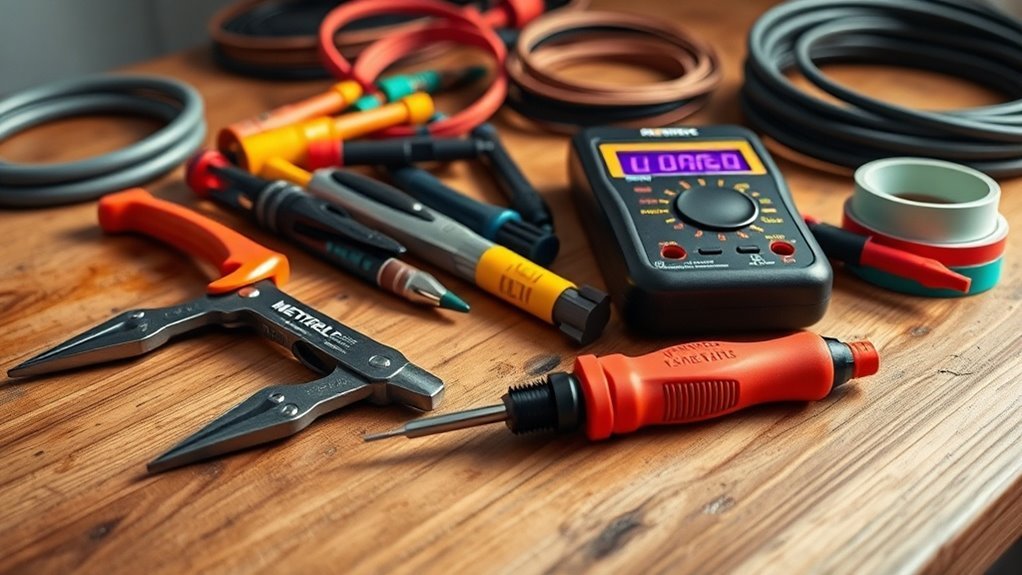
Every DIYer needs essential electrician tools for safe and effective electrical work. Start with the Klein Tools Electrical Test Kit and a versatile 15-in-1 screwdriver. Don’t forget a reliable circuit breaker finder and insulated gloves for safety. A quality wire stripper and crimping tool, along with a GFCI outlet tester, guarantee you handle various tasks. Additionally, a non-contact voltage tester is vital for evaluating live wires. Want to know more about what tools you shouldn’t overlook?
Key Takeaways
- A digital multimeter is essential for measuring voltage, current, and resistance in home electrical projects, ensuring accurate diagnostics.
- Non-contact voltage testers provide a safe way to detect live wires, enhancing safety when performing electrical work around the home.
- A quality wire stripper and crimping tool are necessary for cutting and stripping electrical wires efficiently, promoting precise connections.
- Screwdrivers with multiple bits, like a 15-in-1 ratcheting screwdriver, offer versatility and convenience for various fastening tasks in home electrical work.
- Circuit breaker finders simplify identifying and testing circuit breakers, saving time and ensuring safe troubleshooting of electrical issues.
Klein Tools Electrical Test Kit with Digital Multimeter

If you’re looking for a reliable and versatile testing solution for your home electrical needs, the Klein Tools Electrical Test Kit with Digital Multimeter is an excellent choice. This kit includes a manual-ranging digital multimeter, a non-contact voltage tester, and a receptacle tester, covering all your basic requirements. The multimeter measures voltage, current, and resistance, while the voltage tester detects live wires with audible alerts. You’ll appreciate the easy fault detection features of the receptacle tester, which identifies common wiring issues. With Klein Tools’ legacy of craftsmanship, you can trust this kit for accuracy and durability in every project.
Best For: Homeowners and DIY enthusiasts looking for an all-in-one electrical testing solution for safety and troubleshooting.
Pros:
- Versatile Functionality: The kit includes essential tools for measuring voltage, current, resistance, and detecting wiring faults.
- Easy to Use: User-friendly design of the multimeter and testers makes it simple for both beginners and experienced users.
- Quick Fault Detection: The receptacle tester efficiently identifies common wiring issues, enhancing safety during electrical work.
Cons:
- Manual Ranging Limitation: The MM300 multimeter requires manual ranging, which may be less convenient for some users compared to auto-ranging models.
- Basic Features: While comprehensive, the kit does not include advanced testing features that might be needed for specialized electrical tasks.
- No Case Included: The kit lacks a storage case, which could aid in organizing the tools and ensuring their protection when not in use.
Klein Tools 15-in-1 Multi-Bit Ratcheting Screwdriver
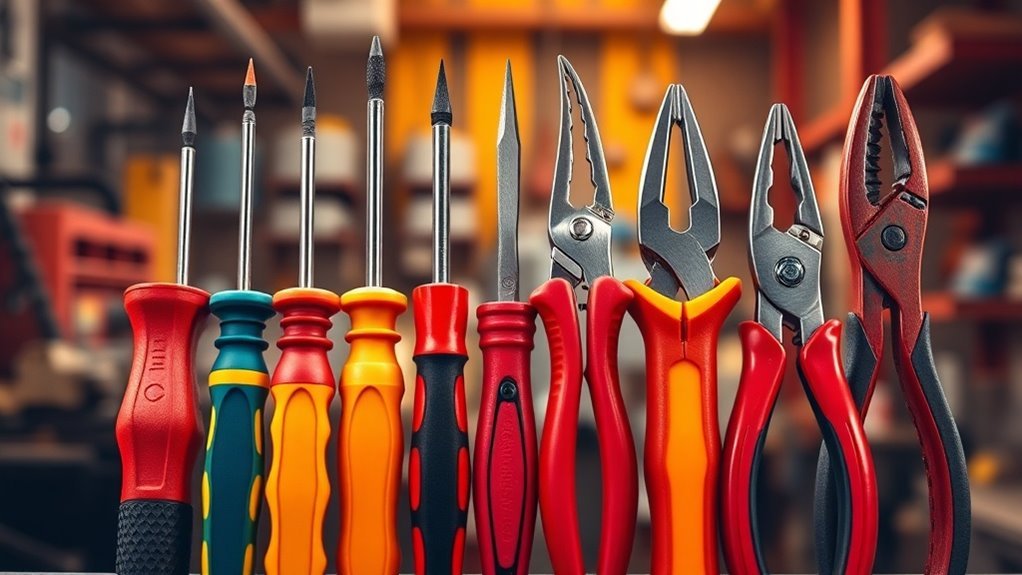
The Klein Tools 15-in-1 Multi-Bit Ratcheting Screwdriver is perfect for electricians and DIY enthusiasts who need a versatile tool that streamlines their projects. With 14 driver tips and a 1/4-inch nut driver, it’s designed for efficiency. You can easily switch between three ratchet positions: forward, fixed, and reverse. This impact-rated screwdriver is suitable for heavy-duty tasks when paired with a compatible impact driver. Its cushion-grip handle guarantees comfort while providing maximum torque, while the integrated storage keeps the industrial-strength bits within easy reach. This tool’s durability and functionality make it a must-have in your toolkit.
Best For: Electricians and DIY enthusiasts who require a versatile tool for various projects.
Pros:
- Offers 15 different driver tips for enhanced versatility in tackling various tasks.
- Cushion-grip handle provides comfort and allows for maximum torque during use.
- Integrated storage keeps bits organized and easily accessible, making it convenient for on-the-go tasks.
Cons:
- May be heavier than traditional screwdrivers, potentially causing fatigue during extended use.
- Requires a compatible impact driver for heavy-duty tasks, which is sold separately.
- Limited to the specific driver tips included, meaning additional bits must be sourced separately for different applications.
Klein Tools ET310 AC Circuit Breaker Finder and Voltage Tester
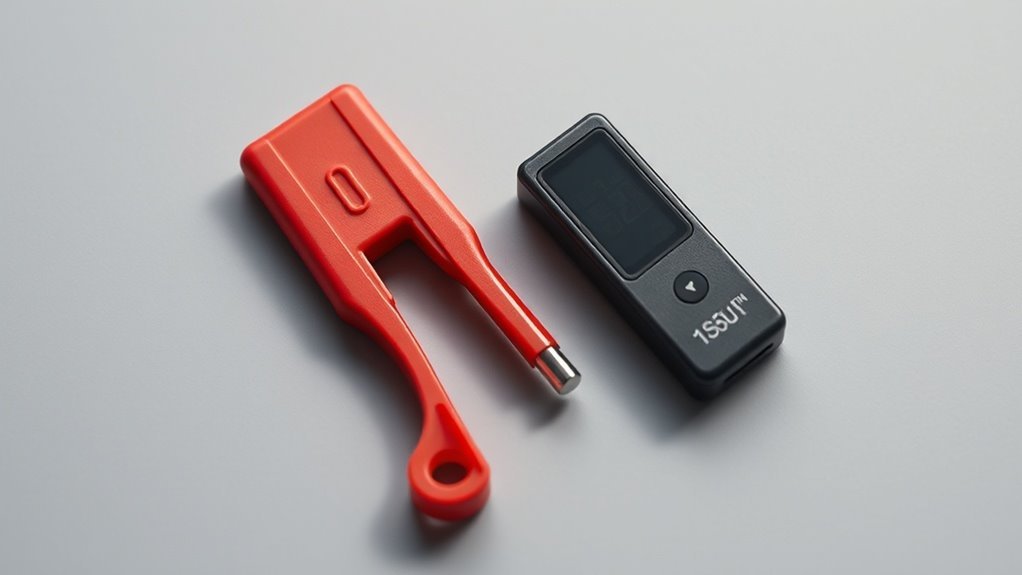
For those seeking a reliable and efficient solution to identify circuit breakers in their home, the Klein Tools ET310 AC Circuit Breaker Finder and Voltage Tester stands out. This two-part system makes locating the correct circuit breaker simple. Connect the transmitter to an outlet, and the receiver will scan the panel, providing clear visual and audible signals when it finds the right match. With built-in GFCI testing for added safety, it checks wiring conditions, ensuring peace of mind during your projects. Plus, its compact design and universal connectivity make storage and use hassle-free for any DIY enthusiast.
Best For: Homeowners and DIY enthusiasts looking for an efficient tool to accurately identify circuit breakers and test electrical outlets.
Pros:
- User-friendly design: The two-part system simplifies the process of locating circuit breakers.
- Safety features: Includes GFCI outlet testing to ensure safe wiring conditions.
- Compact storage: The transmitter docks into the receiver for easy storage and transport.
Cons:
- Limited voltage range: Operates only on 90-120V AC circuits, which may not cover all electrical systems.
- Requires initial setup: Users must connect the transmitter to an outlet before starting the scanning process.
- Audible alerts may be distracting: The audible cues for breaker identification may not be suitable for quiet environments.
Insulated Electrician Gloves for High Voltage Work
Essential for safety-conscious electricians, insulated gloves designed for high voltage work provide a reliable barrier against electrical hazards. Made for working with equipment under 400V, these gloves feature a rubber palm that offers excellent insulation and flame resistance. The textured, anti-slip grip guarantees you handle tasks confidently while the durable nylon fabric promises longevity. Perfect for both home and professional projects, they’re comfortable and allow good dexterity for intricate tasks. Users appreciate the fit and value, though some mention a strong odor upon arrival. Overall, these gloves are a worthy addition to any DIY toolkit focused on safety.
Best For: Safety-conscious professionals and DIY enthusiasts engaged in high voltage electrical tasks.
Pros:
- Excellent insulation and flame resistance, ensuring safety under 400V.
- Durable nylon fabric construction offers longevity and wear resistance.
- Comfortable fit with good dexterity, ideal for precision tasks.
Cons:
- Some users reported a strong odor upon receiving the gloves.
- Flexibility and fit may vary, with some preferring a slimmer design.
- Basic insulation coverage on the palm only, leaving the top of the hand unprotected.
WGGE Professional 8-inch Wire Stripper and Crimping Tool
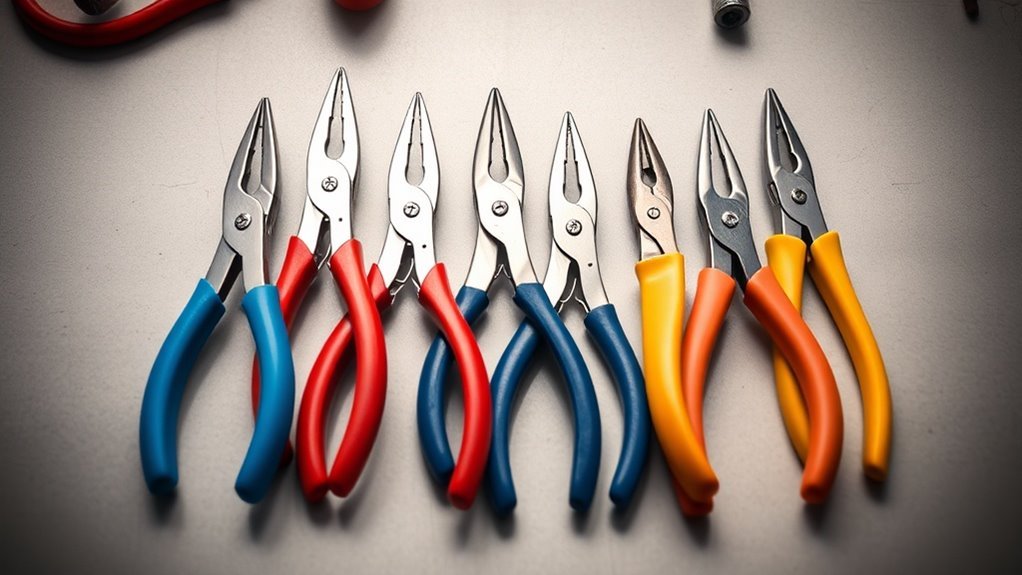
Crafted with both professionals and DIY enthusiasts in mind, the WGGE Professional 8-inch Wire Stripper and Crimping Tool excels as a versatile solution for various electrical tasks. This all-in-one tool effectively cuts and strips 10-22 AWG solid copper or aluminum wires. Made from high carbon alloy steel, it guarantees durability and precise performance. You’ll appreciate the ergonomic curved handle with non-slip rubber, which provides a firm grip and minimizes hand fatigue during use. Plus, with a 24-month warranty and 24/7 customer support, you can feel confident in your investment. It’s an essential addition to your toolkit!
Best For: The WGGE Professional 8-inch Wire Stripper and Crimping Tool is best for both professionals and DIY enthusiasts looking for a reliable and versatile electrical tool.
Pros:
- Durable construction: Made from high carbon alloy steel for long-lasting use and precise performance.
- Ergonomic design: Features a curved handle with non-slip rubber for improved grip and reduced hand fatigue.
- Multi-functional: Capable of cutting, stripping, and crimping wires of various sizes, making it suitable for a wide range of tasks.
Cons:
- Limited to specific wire sizes: Best suited for 10-22 AWG wires, which may not accommodate larger gauges.
- Bulkiness: Some users may find the 8-inch size a bit cumbersome for tight spaces.
- Non-replaceable blades: The longevity of the tool may be limited as the blades cannot be replaced when worn out.
12PCS Hex Shank Screwdriver Bit Holders for Impact Driver
When you’re tackling projects that require precision and speed, the PCS Hex Shank Screwdriver Bit Holders prove to be an invaluable addition to your toolkit. With 12 pieces crafted from durable aluminum alloy and alloy steel, these holders provide versatility for various screwdrivers and drill bits. Their universal compatibility and quick-release design make changing bits a breeze. Plus, the ball lock buckle establishes stability while working. Weighing only 7.4 ounces, these lightweight tools are perfect for contractors, DIY enthusiasts, and anyone needing reliability. With a 30-day money-back guarantee, you can confidently enhance your toolkit without worry.
Best For: Professionals, DIY enthusiasts, and anyone needing versatile and reliable screwdriver bit holders for their toolkits.
Pros:
- Durable Materials: Made from high-quality aluminum alloy and alloy steel, resistant to rust and corrosion.
- Ease of Use: Quick-release design allows for fast changes of screwdriver bits, saving you time on the job.
- Stable and Safe: Ball lock buckle secures drill tools up to 3.3lbs, ensuring stability during use.
Cons:
- Color Durability: Some users reported colored rings falling off more frequently than the black versions.
- Limited to 1/4 inch Compatibility: Only compatible with 1/4 inch quick hex shank and hex socket tools, limiting versatility for other sizes.
- Weight Consideration: While lightweight, some professionals might prefer more robust options for heavy-duty tasks.
Klein Tools ET310KIT AC Circuit Breaker Finder Kit
For anyone tackling electrical work in their home, the Klein Tools ET310KIT AC Circuit Breaker Finder Kit proves to be an invaluable asset. This kit includes an ET310 transmitter and receiver, along with essential adapters for versatile use. You can quickly locate the correct circuit breaker, thanks to the clear visual and audible indicators. Plus, its built-in GFCI tester enhances safety during your projects. The premium carrying case protects and organizes all components efficiently. With an impressive 4.7 out of 5-star rating, you’ll appreciate how this tool enhances both your efficiency and safety in electrical diagnostics.
Best For: Homeowners and DIY enthusiasts looking for a reliable tool to diagnose AC circuits and improve electrical safety during repairs.
Pros:
- Accurate circuit identification with visual and audible cues for efficient troubleshooting.
- Built-in GFCI tester adds an extra layer of safety when working with outlets.
- Premium carrying case included for organized storage and protection of components.
Cons:
- Some users report minor inconsistencies with the sensor performance.
- Requires a 9V battery, which may need to be replaced periodically.
- The sensor can be sensitive to interference in certain environments, impacting accuracy.
Klein Tools RT250 GFCI Outlet Tester with LCD Display
The Klein Tools RT250 GFCI Outlet Tester with LCD Display is an essential tool for both professional electricians and DIY enthusiasts seeking reliable and efficient electrical testing. This tester checks standard 3-wire 120V electrical receptacles and inspects GFCI devices, verifying your wiring’s safe and functional. With its large backlit LCD display, you’ll easily read voltage and wiring conditions. The auto-hold feature makes it simple to capture readings in tight spaces, while bright LED indicators give clear feedback. Plus, its CAT II 135V safety rating guarantees safe usage. Klein Tools’ 160 years of expertise assures you’ll have a durable and high-quality tool.
Best For: Professional electricians and DIY enthusiasts who require reliable and efficient testing of electrical outlets and GFCI devices.
Pros:
- Clear, large backlit LCD display for easy voltage and wiring condition readings.
- Auto-hold feature allows for easy capturing of readings in hard-to-reach outlets.
- Bright LED indicators provide immediate visual feedback on wiring conditions.
Cons:
- Limited to testing standard 3-wire 120V electrical receptacles only.
- Does not provide advanced features for in-depth electrical diagnostics.
- Requires proper instruction for optimal usage, which might overwhelm novice users.
Klein Tools NCVT1P Non-Contact Voltage Tester Pen
Klein Tools NCVT1P Non-Contact Voltage Tester Pen stands out as an essential tool for every DIY enthusiast and professional electrician. It detects AC voltage ranging from 50V to 1000V, making it perfect for evaluating cables, circuit breakers, and outlets. With non-contact detection, you’ll enjoy a bright LED that lights up green in operational mode and turns red with an alert when voltage is present. Its compact design, complete with a pocket clip, guarantees you can easily carry it around. Plus, with CAT IV 1000V safety ratings and auto power-off to save batteries, it’s a smart choice for every toolkit.
Best For: The Klein Tools NCVT1P Non-Contact Voltage Tester Pen is best for DIY enthusiasts and professional electricians who need reliable voltage detection.
Pros:
- Quick and safe: Non-contact voltage detection provides immediate, safe voltage readings without touching wires.
- User-friendly: Bright LED indicators (green for operational, red for voltage) make it easy to understand the tester’s status.
- Portable design: Lightweight with a pocket clip for convenient carrying and accessibility.
Cons:
- Limited to AC voltage: Only detects AC voltage, making it unsuitable for DC voltage applications.
- Battery reliance: Requires batteries for operation, which may need replacement over time.
- Dropping limitations: Although it has 6.6-foot drop protection, it may not withstand significant drops or impacts.
Circuit Breaker Finder & GFCI Outlet Tester with Digital LCD Display
With its dual-function LCD screen that displays real-time voltage and signal strength, the Circuit Breaker Finder & GFCI Outlet Tester makes a fantastic choice for electricians and DIY enthusiasts alike. Weighing just 0.9 pounds and encased in durable, impact-resistant housing, it’s portable and easy to use. The device quickly identifies correct breakers, helping you troubleshoot issues efficiently. Its GFCI test function performs automatic trip tests, while indicator lights reveal common wiring faults. With accurate readings and included accessories like batteries and a screwdriver, this tool offers great value, ensuring safety in both household and commercial environments.
Best For: Electricians, handymen, and DIY enthusiasts seeking an efficient and accurate tool for troubleshooting electrical issues.
Pros:
- Excellent accuracy in identifying circuit breakers and diagnosing wiring faults.
- Lightweight and portable design makes it easy to use and transport.
- Comes with essential accessories, including batteries and a screwdriver, providing added value.
Cons:
- Limited voltage range (90-135V) may not be suitable for all electrical systems.
- Some users may find the automatic trip test feature less customizable.
- The digital display may be difficult to read in bright lighting conditions.
Factors to Consider When Choosing Home Electrician Tools
When choosing home electrician tools, you need to think about several key factors. Tool versatility, measurement accuracy, and safety features can make a big difference in your overall experience. Additionally, consider build quality and ergonomic design to guarantee comfort and durability during your projects.
Tool Versatility and Functionality
Choosing the right tools for home electrical work requires careful consideration of their versatility and functionality. Versatile tools, like multi-bit ratcheting screwdrivers, handle various fasteners, reducing the need for multiple tools and boosting efficiency. Look for tools that combine multiple functions, such as circuit breaker finders with GFCI testers, streamlining testing and troubleshooting. When selecting specific tools like wire strippers and crimping tools, verify they accommodate different wire gauges to meet diverse project needs. Ergonomic designs with non-slip grips help minimize fatigue, allowing for extended use without discomfort. Finally, prioritize safety features like GFCI testing in circuit testers to maintain safe working conditions during electrical tasks. Your toolkit’s variety will guarantee you’re prepared for any electrical challenge.
Measurement Accuracy and Precision
Accuracy in measurement is vital for successful home electrical work, as even minor errors can lead to serious safety issues. When choosing your tools, look for a reliable multimeter that measures voltage, current, and resistance with an accuracy of 0.5% to 1%. This precision guarantees you get the right readings every time. Non-contact voltage testers should detect voltages of at least 50V, so you operate safely without direct contact. Circuit breaker finders need to provide clear visual and audible signals to help you identify circuits effectively. Finally, GFCI testers are essential for checking that ground fault protection trips within 5 seconds, keeping safety at the forefront during your electrical projects. Invest wisely in accuracy for ideal results!
Safety Features and Ratings
Since safety is paramount in electrical work, understanding safety features and ratings can greatly enhance your protection while using tools. When choosing electrician tools, always look for equipment certified with safety ratings like CAT II or CAT IV, indicating their suitability for specific voltage environments. Non-contact voltage detection capabilities are vital, allowing you to assess live wires without touching them directly. Additionally, tools with visual and audible indicators help alert you to voltage presence or wiring faults, creating safer conditions. Insulated tools are essential for protecting against electric shock, so check their rated insulation levels for safe usage. Finally, built-in GFCI testers guarantee ground fault circuit interrupters work properly, reducing risks during your electrical tasks.
Build Quality and Durability
When investing in home electrician tools, the importance of build quality and durability can’t be overstated. High-quality tools made from materials like carbon alloy steel or aluminum alloy not only resist wear and corrosion but also promise longevity. If you’re looking for tools that can withstand the test of time, opt for those designed for professional use, as they often feature sturdy housing and ergonomic grips.
Additionally, many of these tools undergo rigorous testing to meet safety ratings such as CAT II or CAT IV, ensuring reliable operation under specified voltage limits. Tools with integrated safety features, like GFCI testers and non-contact voltage detection, enhance your safety and help prevent accidents. Finally, investing in premium-grade tools often means longer warranties, showcasing the manufacturer’s trust in their durability.
Ergonomic Design and Comfort
While high-quality tools are essential, don’t overlook the importance of ergonomic design and comfort in your selection. Ergonomic tools minimize hand fatigue during long tasks, helping you work efficiently without discomfort. Featured non-slip grips and curved handles give you a secure hold, enhancing control and reducing the risk of slippage when applying torque. Many ergonomic options fit your hand’s natural contour, promoting proper wrist alignment and lessening strain injuries. Lightweight materials contribute to overall ease of handling, allowing for extended use without added physical burden. Plus, comfort-focused designs often include cushion grips and adjustable lengths, giving you a customized fit that suits various hand sizes and personal preferences. Prioritizing comfort leads to better performance and satisfaction in your DIY projects.
Compatibility With Electrical Systems
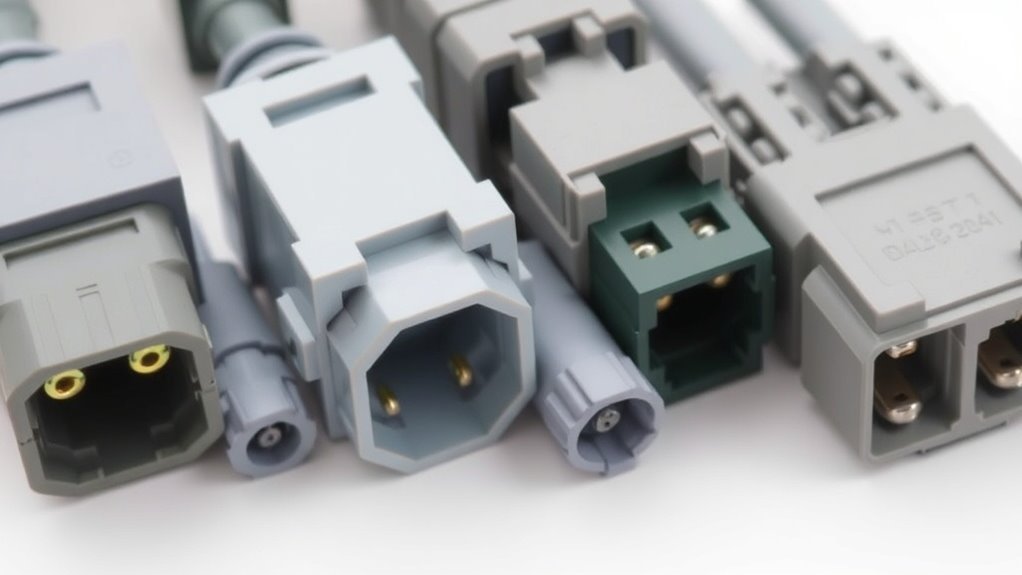
Choosing the right tools that align with your specific electrical systems can greatly enhance your efficiency and safety during DIY projects. First, make sure your tools operate at the voltage levels common in residential settings, typically between 90-120V. Also, select tools that are compatible with standard connection types like 3-prong and 2-prong plugs to avoid disruptions while testing or repairing. Pay attention to measurement capabilities, confirming tools can handle the necessary voltage and current levels. It’s essential to verify that your testing tools meet safety ratings appropriate for your work environment, such as CAT II or CAT IV, to reduce accidents. Finally, opt for multi-functional tools to boost compatibility and versatility across different electrical systems.
Ease of Use and Storage
The ease of use and storage of electrician tools can greatly impact your workflow and overall project success. Opt for tools designed with user-friendly features like clear indicators and ergonomic grips. These aspects enhance efficiency during electrical tasks. Additionally, look for compact storage options, such as integrated carrying cases or built-in compartments, to keep your workspace organized and minimize the loss of smaller components. Lightweight and portable designs are vital, as they make transporting tools easier without causing fatigue during extended use. Choosing multifunctional instruments simplifies your tasks and reduces the number of tools you need. Finally, verify tools have clear safety ratings and indicators that are easy to read, helping you quickly assess electrical conditions and minimize user error.
Warranty and Support Options
When investing in home electrician tools, warranty and support options can greatly influence your decision. A longer warranty often reflects the manufacturer’s confidence in their product’s durability and quality. Look for tools that offer a money-back guarantee within a specified period, which adds peace of mind. Customer service availability matters too; having dedicated support guarantees you can get help when troubleshooting or asking questions post-purchase. Consider warranties that include repair services instead of just replacement, as this can save you money for tools that might require maintenance during regular use. Additionally, some manufacturers provide extended warranty options for an extra fee, giving you longer-term coverage for high-value tools.
Questions
What Safety Precautions Should I Take While Using Electrician Tools?
Always wear insulated gloves and safety goggles when working with electrical tools. Keep your workspace dry, use equipment rated for your tasks, and double-check that circuits are de-energized before starting any project. Stay aware and focused.
How Do I Maintain My Electrical Tools for Longevity?
Inspect your tools regularly, keeping them clean and dry. Check for damage and sharpen blades when needed. Proper storage protects them from moisture and dust, extending their lifespan—imagine all the projects you’ll tackle with reliable tools!
When Should I Replace My Electrical Tools?
You should replace your electrical tools when they show signs of wear, lose functionality, or become unsafe. Regularly inspect your tools, and don’t hesitate to upgrade if repair costs exceed their value or efficiency diminishes.
Are There Any Beginner-Friendly Electrician Tools?
If you’re starting out like a caveman with a spark of electricity, grab a good multimeter, wire strippers, and a voltage tester. Those tools are beginner-friendly, making your electrifying adventures safe and successful!
How Do I Determine the Right Tool for a Specific Electrical Task?
To determine the right tool, assess the task’s requirements. Research what tools are needed for specific jobs, and consider safety features. If unsure, consult experienced DIYers or guides to verify you’re well-equipped before starting.
Conclusion
In summary, having the right tools in your toolkit makes all the difference when tackling electrical projects at home. You’ll not only work more efficiently, but you’ll also enhance safety. Plus, let’s be honest—who doesn’t want to feel like a DIY superhero with a full arsenal of electrical gadgets? By investing in these essential tools, you’re setting yourself up for success and turning your home into a safe and functional space. So, gear up and get started!