
10 Best OBD Scanners of 2026 – Your Essential Guide to Car Diagnostics

If you’re looking for the best OBD scanners of 2026, you need tools like the ANCEL AD310 for basic diagnostics or the FOXWELL NT604 for thorough functionality. The Autel MaxiCOM MK808S offers extensive vehicle coverage, while the LAUNCH CRP123I provides user-friendly features. Each scanner has its strengths, whether for troubleshooting or advanced diagnostics. Stick around, and you’ll discover which option fits your needs best and how to make the most of your investment in car diagnostics.
Key Takeaways
- The best OBD scanners of 2026 should offer features like multi-system diagnostics, real-time data monitoring, and an extensive DTC lookup library for efficient troubleshooting.
- Evaluate compatibility with a wide range of vehicle models to ensure a scanner meets diverse diagnostic needs across various brands.
- Consider user-friendly interfaces and ease of operation, especially for novice users looking for straightforward diagnostics without complex setups.
- Review warranty and return policies to ensure peace of mind and buyer satisfaction with scanner purchases in case of any issues.
- Balance price and features; while basic models provide essential functions, pricier scanners offer advanced capabilities like active testing and extensive vehicle coverage.
ANCEL AD310 OBD II Scanner Car Engine Fault Code Reader

If you’re a car owner seeking an affordable yet effective diagnostic tool, the ANCEL AD310 OBD II Scanner is an excellent choice. This compact device fits easily in your bag and offers reliable performance. With the ability to read and clear diagnostic codes, access live data, and monitor vehicle readiness, you’ll gain valuable insights before heading to the mechanic. Compatible with all OBDII protocols, it works seamlessly with vehicles from 1996 and newer. Plus, it operates directly from the OBDII connector, so you won’t need batteries. Praised for its user-friendly interface, it’s a smart investment for any driver.
Best For: The ANCEL AD310 OBD II Scanner is best for car owners who want an affordable and straightforward diagnostic tool for basic vehicle troubleshooting.
Pros:
- User-friendly interface with clearly labeled buttons and a large display for easy readability.
- Compatible with a wide range of OBDII protocols and vehicles from 1996 onwards.
- Compact design with a sturdy build for easy transport and durability.
Cons:
- Basic functionality may not meet the needs of advanced users or professional mechanics.
- Lacks advanced features like extensive vehicle diagnostics or live data graphing.
- Limited compatibility with non-OBDII vehicles or older models pre-dating 1996.
FOXWELL NT301 OBD2 Scanner for Diagnostic Code Reading

The FOXWELL NT301 OBD2 Scanner is an excellent choice for DIY enthusiasts and weekend mechanics seeking a straightforward diagnostic tool. It features a 2.8-inch color display and supports OBDII protocols for vehicles from 1996 onward. With capabilities to read DTCs, monitor live data, and display fault code definitions, it simplifies vehicle diagnostics. The plug-and-play design makes it user-friendly, requiring no setup or built-in battery. Its one-click readiness button and LED indicators help prepare for emissions testing. Though it doesn’t cover ABS or SRS systems, this scanner boasts positive reviews for effectiveness and usability.
Best For: DIY enthusiasts and weekend mechanics looking for a reliable and user-friendly diagnostic tool for their vehicles.
Pros:
- Easy plug-and-play design requires no setup or batteries, making it user-friendly.
- Supports a wide range of vehicles, effectively reading DTCs and monitoring live data.
- Positive feedback from users highlights its effectiveness in diagnosing car issues.
Cons:
- Does not support ABS or SRS systems, limiting its diagnostic capabilities.
- May experience slower data reading on older vehicles from 1996-2003.
- Instructions in the manual have a small font, which may be challenging for some users.
MOTOPOWER MP69033 Car OBD2 Scanner Code Reader

For DIY car enthusiasts needing a reliable and straightforward diagnostic tool, the MOTOPOWER MP69033 Car OBD2 Scanner stands out. This yellow code reader is compatible with all OBD II protocol cars since 1996, making it versatile. It features a 2.8-inch LCD display with a backlight for easy reading. You can read and erase codes while viewing vehicle data like speed, temperature, and engine speed. Just plug it into the OBDII port, turn on the ignition, and you’re ready to go. While it primarily focuses on engine diagnostics, it reads and clears check engine information effectively.
Best For: DIY car enthusiasts looking for a reliable and user-friendly diagnostic tool for their vehicles.
Pros:
- Compact design with a long, flexible cable for easy maneuverability during use.
- Multi-functional capabilities that include reading and erasing codes, viewing live data, and accessing a DTC lookup library.
- Compatible with all OBD II protocol cars since 1996, offering broad usability across different vehicle makes and models.
Cons:
- Limited to engine diagnostics as it does not support ABS, Airbag, or Oil Service Light functions.
- No battery or rechargeable option, relying solely on vehicle power connection during use.
- Customer service may be required for connection failures or issues, which may be inconvenient for some users.
ANCEL AD410 Enhanced OBD2 Scanner for Check Engine Light

Compact and user-friendly, the ANCEL AD410 Enhanced OBD2 Scanner is perfect for DIY enthusiasts and mechanics alike who want an efficient way to diagnose check engine issues. This scanner works with OBDII vehicles from 1996 onward, covering a wide range of makes and models. You’ll appreciate its ability to quickly read and clear fault codes, with over 42,000 DTC lookups for easy identification. The intuitive design and a vibrant 2.4-inch display make navigation straightforward. Plus, it resets the Malfunction Indicator Light, helping you stay ready for smog tests. It’s reliable and efficient, ideal for regular vehicle maintenance.
Best For: DIY enthusiasts and mechanics looking for an efficient tool to diagnose and troubleshoot check engine issues in OBDII vehicles.
Pros:
- Easy to read and clear fault codes with over 42,000 built-in DTC lookups.
- User-friendly design with a vibrant 2.4-inch display for straightforward navigation.
- Resets the Malfunction Indicator Light, ensuring readiness for smog tests.
Cons:
- Limited to reading engine codes; does not support ABS, SRS, or transmission systems.
- Documentation may lack clarity, causing potential confusion for users.
- Customer support availability may be inconsistent, leading to delays in assistance.
FOXWELL NT604 Elite OBD2 Car Scanner

Engineers and DIY enthusiasts alike will find the FOXWELL NT604 Elite OBD2 Car Scanner a valuable addition to their toolkit. This versatile scanner diagnoses common automotive issues across ABS, SRS, transmission, and check engine systems. You’ll appreciate its live data streaming, built-in DTC library, and data playback features, all without extra software fees for over 60 car makes. Setup is a breeze with out-of-the-box functionality and an intuitive interface. Weighing just 2.79 pounds, it’s portable and durable. With a strong customer rating of 4.3 out of 5 stars, it’s a cost-effective choice for detailed vehicle diagnostics.
Best For: The FOXWELL NT604 Elite OBD2 Car Scanner is best for DIY enthusiasts and engineers seeking an affordable and efficient tool for diagnosing automotive issues.
Pros:
- Easy to use with an intuitive interface and out-of-the-box functionality.
- Compatible with over 60 car makes without extra software fees, providing excellent value.
- Lightweight and portable design with a robust protective case for durability.
Cons:
- Lacks maintenance functions such as EPB reset and oil light reset.
- Does not clear crash/collision data after airbag replacement.
- Limited functionality for older cars and non-compatibility with TPMS programming.
BlueDriver Bluetooth Pro OBDII Scan Tool for iPhone & Android

The BlueDriver Bluetooth Pro OBDII Scan Tool is perfect for car owners seeking an all-in-one diagnostic solution for their gas-powered vehicles from 1996 onward. Compatible with a wide range of brands, this tool lets you read and clear trouble codes, including ABS and Airbag issues. Enjoy live data monitoring, providing real-time insights like speed and coolant temperature. Its user-friendly app, compatible with both iOS and Android, guides you through repairs with step-by-step videos. Plus, with no subscription fees and 24/7 support, you’ll save money while keeping your vehicle in top shape. Just be aware of privacy concerns regarding data collection.
Best For: Car owners looking for an effective and user-friendly diagnostic tool for their gas-powered vehicles from 1996 onwards.
Pros:
- Comprehensive diagnostics: Read and clear codes for various systems including ABS, Airbag, and TPMS.
- Real-time data monitoring: Provides live insights into key vehicle metrics like speed and coolant temperature.
- No subscription fees: One-time purchase with 24/7 support and step-by-step repair videos included.
Cons:
- Data privacy concerns: Requires users to create a free account which raises potential data mining issues.
- Advanced feature limitations: Some users report difficulties with features like reading transmission temperatures.
- Possible miscommunication: Cheaper diagnostic tools may suffice for basic needs without the risk of data collection.
TOPDON AD500 OBD2 Scanner and Diagnostic Tool

For DIY enthusiasts looking for a reliable and affordable solution, the TOPDON AD500 OBD2 Scanner and Diagnostic Tool stands out with its extensive features. It offers full OBD2 functions alongside four-system diagnostics for engine, transmission, ABS, and SRS. You’ll appreciate the real-time data visualization and the Smart AutoVIN feature that keeps track of your vehicle specifics. Plus, with six essential maintenance reset services, you can easily manage throttle adaptation, oil changes, and more. This scanner is compatible with over 67 car brands, ensuring it meets your diagnostic needs while boasting a user-friendly touchscreen for seamless operation.
Best For: DIY enthusiasts seeking a reliable and affordable car diagnostic solution with comprehensive features.
Pros:
- Full OBD2 functionality allows for thorough vehicle diagnostics.
- User-friendly touchscreen and physical buttons make operation intuitive.
- Wide compatibility with over 67 car brands and 10,000+ models globally.
Cons:
- May lack some advanced features found in higher-end models.
- Limited to 12 languages, which might not cover all user preferences.
- Real-time data processing can be slower with multiple live data streams.
Autel MaxiCOM MK808S Scanner with 28+ Service and Active Test
If you’re a DIY mechanic or a professional technician seeking a versatile diagnostic tool, the Autel MaxiCOM MK808S Scanner with its 28+ service functions and active test capabilities is an excellent choice. This upgraded bi-directional scanner supports over 150 car brands and performs all system diagnostics, including reading and clearing fault codes. With features like Auto VIN detection and 5-in-1 live data display, it streamlines your diagnostics. Plus, the active test functionality allows you to assess car actuators efficiently. Enjoy a year of free software updates, keeping your scanner compatible with newer models at a budget-friendly price.
Best For: DIY mechanics or professional technicians looking for a versatile and cost-effective diagnostic tool.
Pros:
- Supports over 150 car brands and provides extensive diagnostic capabilities across all vehicle systems.
- Features such as Auto VIN detection, 5-in-1 live data display, and active test functionality enhance diagnostic efficiency.
- One year of free software updates ensures ongoing compatibility with newer vehicle models without additional costs.
Cons:
- While it offers many functionalities, it may not provide all the advanced features found in premium models.
- A slight learning curve may be encountered by users new to diagnostic tools.
- Does not include mandatory updates, which could limit features for the latest vehicle technologies without manual intervention.
LAUNCH OBD2 Scanner CRP123I V2.0 Elite Diagnostics Tool

Offering advanced functionalities, the LAUNCH OBD2 Scanner CRP123I V2.0 Elite is perfect for DIY mechanics and professional technicians alike. It checks multiple systems—Engine, ABS, SRS, and Transmission—and offers 10 OBD2 modes for reading and clearing fault codes. With a 5-inch touchscreen and a powerful 6000mAh battery, you’ll enjoy user-friendly navigation and long-lasting use. You can perform 7 reset functions like Oil Reset and DPF Regeneration, while real-time data monitoring helps assess battery health. Plus, with compatibility across over 10,000 vehicle models, this tool is essential for anyone serious about car diagnostics.
Best For: The LAUNCH OBD2 Scanner CRP123I V2.0 Elite is best for DIY mechanics and professional technicians seeking advanced diagnostic capabilities for a wide range of vehicles.
Pros:
- Comprehensive diagnostics for multiple systems including Engine, ABS, SRS, and Transmission.
- User-friendly interface with a 5-inch touchscreen and extensive real-time data monitoring features.
- Compatibility with over 10,000 vehicle models, making it suitable for various makes and years.
Cons:
- May require a learning curve for users unfamiliar with diagnostic tools.
- Some advanced features may be limited based on specific vehicle models or years.
- Battery life may vary depending on usage and frequency of diagnostics performed.
Autel Professional OBD2 Scanner AL319 Code Reader
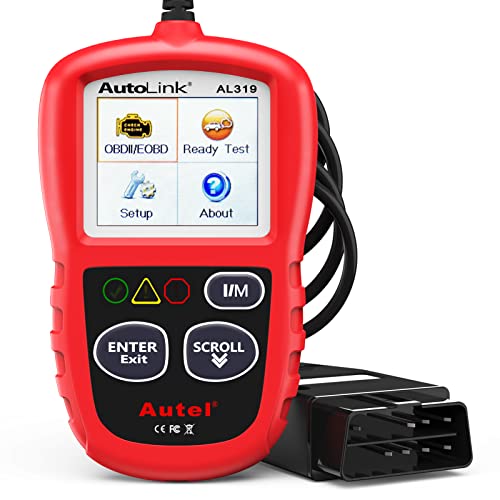
The Autel Professional OBD2 Scanner AL319 Code Reader stands out for its user-friendly features, making it ideal for everyday drivers and DIY mechanics alike. This compact tool easily diagnoses Check Engine Light issues in all OBDII vehicles post-1996, while supporting DTC reading, live data, and freeze frame. With patented One-Click I/M Readiness, a vibrant TFT color display, and a built-in speaker, it simplifies diagnostics. You’ll appreciate its lightweight design and plug-and-play capability—no batteries required. Backed by a 12-month warranty and lifetime updates, it’s praised for reliability, making it a top choice for both casual and frequent users.
Best For: Everyday drivers and DIY mechanics seeking a reliable, easy-to-use tool for diagnosing Check Engine Light issues in OBDII vehicles.
Pros:
- User-friendly design with One-Click I/M Readiness and a vibrant TFT color display.
- Lightweight and compact, making it easy to handle and store.
- No batteries required, ensuring hassle-free plug-and-play operation.
Cons:
- Limited to OBDII vehicles post-1996, excluding older models.
- May not provide advanced features found in more expensive diagnostic tools.
- Users seeking in-depth diagnostics may find it lacking compared to higher-end scanners.
Factors to Consider When Choosing OBD Scanners
When you’re choosing an OBD scanner, there are key factors to keep in mind. You need to contemplate compatibility with your vehicle, the diagnostic functions it offers, and how user-friendly it is. Also, don’t forget to weigh the price against the features, plus check the warranty and return policy for peace of mind.
Compatibility With Vehicle Makes
Choosing an OBD scanner that fits your vehicle makes is vital for effective diagnostics, especially since not all scanners support every OBDII protocol. Make certain the scanner is compatible with your vehicle’s specific OBDII protocol, which can include KWP2000, J1850 VPW, ISO9141, J1850 PWM, or CAN. Check your vehicle’s manufacturing year, knowing that U.S. models from 1996 and EU models from 2000 typically qualify for OBDII support. Some scanners may cater to certain brands better than others, so review the manufacturer’s specifications. Also, verify the scanner can read important systems like the engine, ABS, and SRS, as not all offer thorough coverage for all vehicle types. Compatibility is key to effective diagnostics.
Diagnostic Functionality Available
How can you guarantee your OBD scanner meets your diagnostic needs? Start by ensuring it can read and clear Diagnostic Trouble Codes (DTCs). This is essential for pinpointing vehicle issues. Look for scanners with live data monitoring, allowing you to assess real-time metrics like speed, RPM, and coolant temperature. A built-in DTC lookup library simplifies code identification and provides insights into potential problems. Don’t overlook compatibility with vehicle protocols, such as KWP2000, CAN, and ISO9141, to guarantee a broader range of vehicle usage. Finally, consider whether the scanner supports multi-system diagnostics for additional systems like ABS and SRS, as this enhances its overall utility and effectiveness in maintaining your vehicle’s health.
User-Friendly Interface Design
A user-friendly interface design can make all the difference in your experience with an OBD scanner. Look for clearly labeled buttons and a well-organized menu layout to simplify navigation, regardless of your experience level. Large, high-contrast displays enhance readability, allowing you to view diagnostic information easily, even in low-light conditions. Scanners that offer real-time data streaming and graphical representations can help you quickly identify vehicle issues and monitor performance metrics effectively. Additionally, intuitive designs with plug-and-play capabilities minimize setup time, enabling you to focus on diagnostics without hassle. If you’re a non-native speaker, opt for devices with multi-language support, making it easier for everyone to utilize the scanner efficiently. Your experience should be straightforward and hassle-free!
Price vs. Features Balance
When you’re evaluating OBD scanners, finding the right balance between price and features is essential for making an informed purchase. Consider the range of features you need, like reading and clearing fault codes, monitoring live data, and enhanced diagnostics. More affordable models typically offer basic functions, while pricier options come with advanced features like multi-system diagnostics and real-time data graphing. Also, think about built-in vehicle coverage; broader compatibility might cost more but can save you in the long run. Features like I/M readiness indicators and freeze frame data can enhance your experience, making the investment worthwhile. Ultimately, assess how often you’ll use the scanner and what types of vehicles you’ll work on to determine the best value for your needs.
Warranty and Return Policy
Investing in an OBD scanner isn’t just about price and features; warranty and return policies play an essential role in your decision. First, check the warranty period. A longer warranty often indicates the manufacturer’s confidence in their product’s reliability. Next, understand the return policy—know how long you have for returns and any conditions that could affect eligibility. Look for brands that offer a money-back guarantee, which reduces your risk as a buyer. Additionally, verify if the warranty covers both parts and labor for added peace of mind. Finally, consider how easy it is to claim a warranty or return the product, as a streamlined process can enhance your overall satisfaction.
Data Connectivity Options
Whether you’re a DIY mechanic or a professional technician, the way your OBD scanner connects can greatly impact its usability and efficiency. Bluetooth options let you wirelessly transmit data to your smartphone or tablet, minimizing cable clutter. If you prefer reliability, look for scanners with direct USB connections; they provide solid data transfer, especially for detailed laptop analysis and software updates. Advanced models may offer Wi-Fi connectivity, enabling software updates and cloud-based features for a more interactive experience. Most scanners operate directly from your vehicle’s OBDII Data Link Connector, so you won’t need extra power sources. Finally, verify compatibility with multiple protocols like KWP2000 or ISO9141, enhancing your scanner’s effectiveness across various vehicle makes and models.
Questions
Are OBD Scanners Compatible With All Car Brands and Models?
OBD scanners aren’t compatible with all car brands and models. Most work with vehicles made after 1996, but some may struggle with specific brands or features. Always check compatibility before purchasing an OBD scanner.
How Often Should I Use an OBD Scanner?
You should use an OBD scanner whenever your check engine light comes on, after completing any major repairs, or periodically for preventive maintenance. Regular scans help you catch issues before they become costly problems.
Can OBD Scanners Help With Preventive Maintenance?
Think of an OBD scanner as your car’s best friend. It helps you keep tabs on performance, alerts you to issues before they escalate, and ultimately saves you money on costly repairs. Use it regularly!
Are There Any Subscription Fees for Using OBD Scanners?
Most OBD scanners don’t require subscription fees, but some advanced models offer additional features through paid subscriptions. You should check the specifications to see if any ongoing costs apply to your chosen scanner.
Do OBD Scanners Require Special Knowledge to Operate?
No, OBD scanners don’t require special knowledge to operate. You can easily plug them into your vehicle’s port, follow on-screen instructions, and read the codes. A bit of research helps you understand the results better.
Conclusion
Choosing the right OBD scanner can be a game-changer for your car’s health. Whether you need a basic code reader or a versatile diagnostic tool, you’ve got options that fit your needs perfectly. Features and budget matter, but don’t forget to take into account ease of use and software updates as well. With the right scanner in your hands, diagnosing issues can be quick and efficient. So, gear up and take control of your car’s diagnostics today!


